1KOMMA5
SEP - NOV 2024
LEAD DESIGN
1KOMMA5° is the one-stop shop for intelligent, integrated energy solutions in European market. With regional operational and craftsmen teams handling consultation and planning to installation and maintenance.
Operations teams at 1KOMMA5° were managing 60+ installation orders a day across disconnected tools, manual spreadsheets, and no real-time status picture. I led the end-to-end design of — an internal Order Management System that consolidated production, dispatch, and order workflows into a single operational surface.



95%
Increased adoption of
OS with 3000+ daily
active users
44%
Increase in amount of orders
created by Order managers
+
Reduced manual effort on team comms, Improved operational visibility
THE CHALLENGE
Operations teams weren't completely blind in their process — they had the data. But It lived in spreadsheets, status emails, and back-and-forth Slack threads. The problem was that no single tool held the full picture, so every decision required someone to go collect it.
The existing workflow lacked visibility across departments, leading to delays, duplicate work, and inconsistent reporting.
Existing system weren't built for operational businesses changing needs, leading to multiple disconnected tools, manual reconciliation, and zero real-time reporting.

Discovery phase resulted with the Order Fulfillment team: shadowing daily work, mapping the actual sequence of touches between an order arriving and a field team being dispatched.
Three patterns surfaced consistently:
Unreliable order lifecycle states
Operations teams needed a reliable way to track orders, production status, payable account activities in one place.
Does not support operational flexibility
Delivering hardware to customer and building requires flexibility and adjustment on timelines
No focus on what matters
Information density with the 30+ orders per day that come in. Zero at-a-glance state, with no progress indicators.
Data quality

1KOMMA5° had a big business intelligence gap in knowing how the Orders were steered by their branches across Germany. Business lacked essential layer optimising processes in operations.
Cost efficeny

Uncertain processes led to the problem of not making sure business runs in most efficent way or how processes can be optimised
SOLUTION SPACE
The solution focused on simplifying operational planning by bringing fragmented workflows into a single, structured interface.
The platform was designed to reduce manual coordination, improve visibility across teams, and help users quickly identify priorities without switching between systems.
We needed to emphasize clarity, hierarchy, and fast scanning so operational teams can manage large volumes of information with less cognitive load and fewer errors.
With the solution shape defined, the immediate next step became crystal clear: a simpler navigation architecture .
The new navigation makes the fix structural: inbound is no longer one action but three trackable stages, each with its own state. That's what turns "proof of purchase" from a policy into something the interface actually enforces.
One undifferentiated step with no check points.
ORIGINAL NAVIGATION


REVISITED NAVIGATION


SOLUTION MILESTONE 1
The first thing I tackled was visibility. Before any workflow redesign could land, teams needed a shared picture of the day.
The key decision was to make the default view useful without any configuration — something a coordinator could open at 8am and immediately understand what was behind schedule.
Daily production & productive tracking
Order volume, completion rate, and active installs at a glance
Installation Dispatch monitoring
Field team installation assignments status without opening individual orders

SOLUTION MILESTONE 2
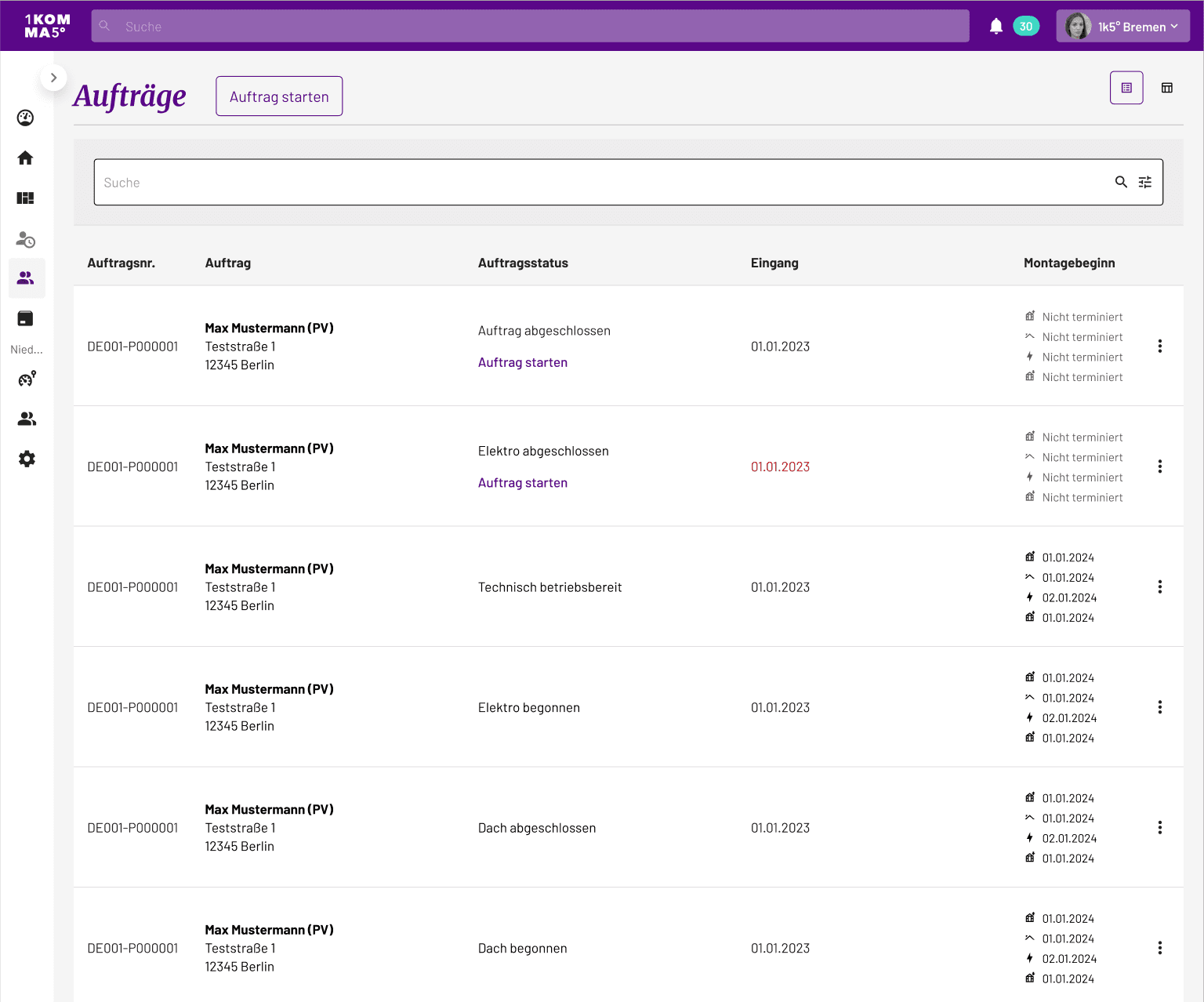
The second surface was the Orders table itself. The existing version was a flat, undifferentiated list.
Every column had equal weight. Filtering was limited.
I redesigned this around a simple premise: the same order means different things to an Order Manager, a Controller, and a Field Team lead. Each needs to see a different slice of the same data.
Prioritized information hierarchy
The table now leads with status, install date, and any blocking flags. Supporting fields are accessible but not competing.
Efficiency-driven interactions
Inline status updates, batch actions for common operations, and contextual quick-links reduced the number of clicks for the most frequent tasks.
Configurable columns and saved views
Users can pin the columns that matter to their role and save that configuration. In practice it was the feature that got the most positive feedback during testing.

A focused, intentionally structured Order View for busy operations needs for a variety of Order View structures efficient for all tasks.
Design delivery flows for the Order configuration flows
Design System Growth at 1K5
As design process moved into high fidelity stage, I established a recurring weekly component review session with our Design System council. Three questions kept coming up:
How to deal with existing components having conflicts with the new features we were going to build?
How to update the existing components to better address the solutions we came up with?
Whether it’s worth introducing new components from this project to other teams?
This discipline prevented the Leasing redesign from fragmenting the design system through ad-hoc divergence. It also meant that new patterns, like the Navigation and Header”, were properly documented and reviewed before they shipped, rather than becoming hard-to-maintain “Snowflake component”.
OUTCOME
01
Lower operational overhead
Operations teams cut manual coordination time by roughly 40%, with fewer tools open and more decisions made in one place.
02
Improved visibility
Teams now have an at-a-glance picture of day-level production, fulfillment, and dispatch without a single spreadsheet open.
